Loading...


Accessible Visit
From the moment of its opening, the Royal Collections Gallery has been committed to working under a "Design For All" strategy, seeking to design products and services that can be used by as many persons as possible, regardless of their age, personal circumstances and functional abilities.
To this end, it is housed in a building free from obstacles and architectural barriers, and it continues to implement a series of actions to adapt its services with specific support products, so they may reach all visitors who require them.
Patrimonio Nacional has received the support of the Royal Disability Foundation and the ONCE Foundation, which have conducted an assessment of the building's accessibility and are its ongoing partners in developing actions for further improvement. .
Physical Accessibility
Entrances
The entrances to the building are completely adapted to the movement of people with mobility difficulties.
- The entrances to the Gallery, both through Plaza de la Armería (Floor 0) and Cuesta de la Vega (Floor -3) are completely accessible for wheelchairs, strollers and any other element involving reduced mobility.
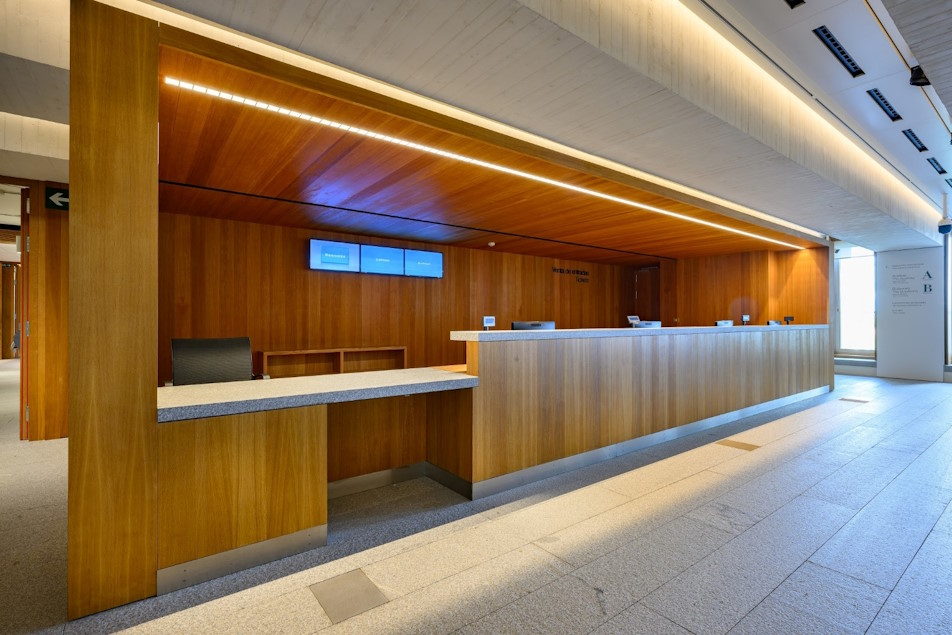
- The information, ticketing and cloakroom desks have adapted height for visitors in wheelchairs.
Circulation
The interior route from the reception area until the permanent exhibition halls and the temporary exhibition hall is fully adapted for obstacle-free circulation with ramps and lifts. .
Resources to support your visit
In order to promote full physical accessibility, the Gallery provides visitors with different specific support elements:
- Wheelchairs and walking stick seats are available on loan upon request at the visitor desks.
- Folding seats in the permanent exhibition halls, to facilitate occasional rest during the visit.
Sensory and Cognitive Accessibility
The Gallery has developed and continues to work on actions to promote sensory and cognitive accessibility.
Adapting the environment to sensory accessibility criteria enables people with specific vision or hearing requirements to visit the Gallery under equal conditions. Regarding the adoption of measures to promote cognitive accessibility, it should be considered that they benefit all people with comprehension difficulties, not only persons with intellectual disabilities but also people with low levels of reading and writing skills or those who are unfamiliar with the Spanish language.
Access
- Service dogs and guide dogs are admitted on presentation of the relevant documentation and provided that the animal is properly identified.
- Visitor desks are equipped with an acoustic amplification system using magnetic induction loops for people with cochlear implants and/or hearing aid users with the "T" position.
- When using audio guides, visitors may request a hearing loop that is compatible with the machine at no additional cost.
Circulation
- The lifts have Braille push-button panels and sound recording that announces the floors and the closing and opening of doors.
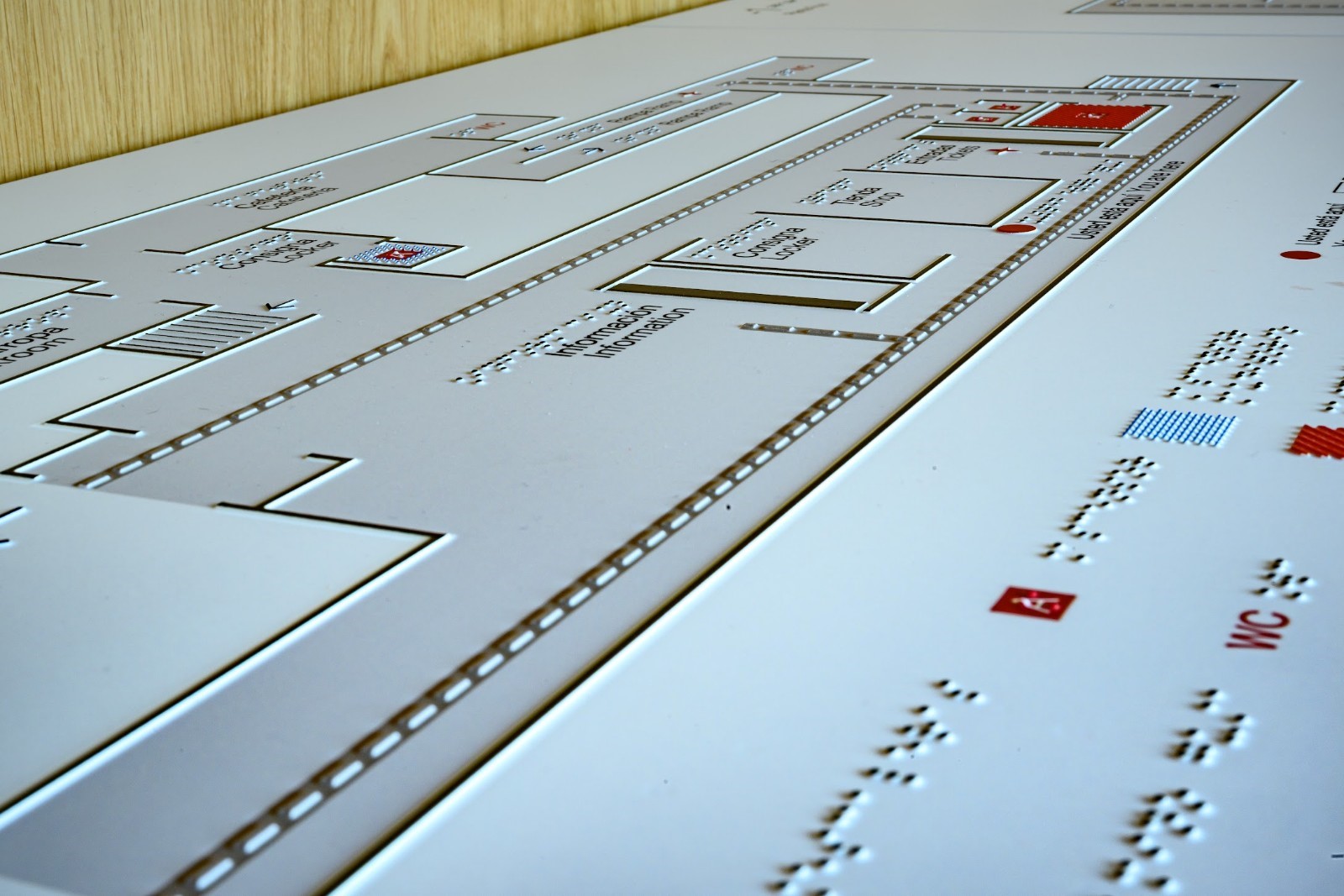
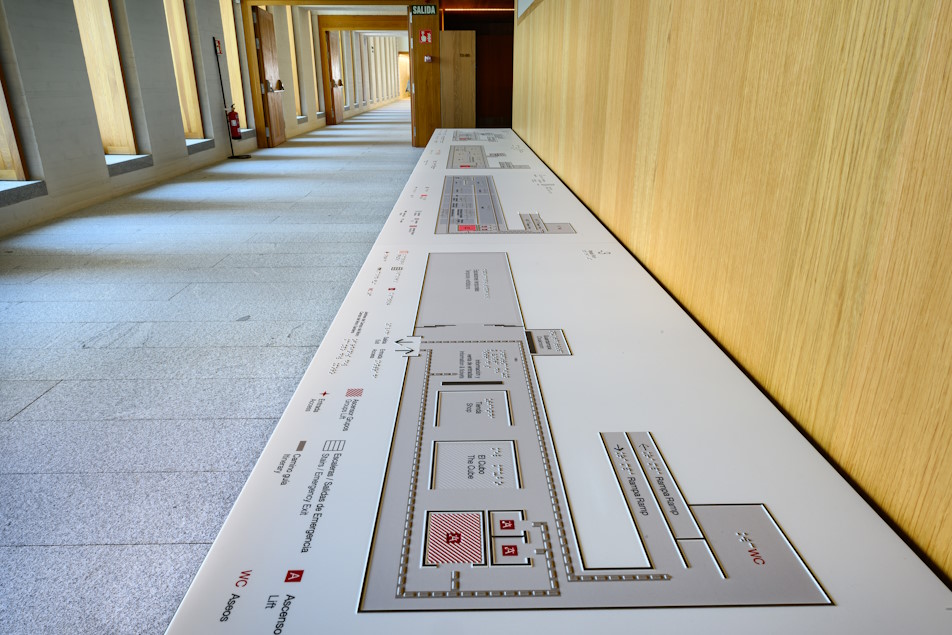
- Installation of accessible information lecterns on the entrance floor of the Plaza de la Almudena and the entrance floor of the Cuesta de la Vega, with a tactile map and information in Braille, allowing for better spatial orientation for people with visual impairments.
- The explanatory audiovisuals on each floor are in voice-over format for persons with visual impairments, and subtitles for the deaf and hard of hearing.
Resources to Support your Visit
Visitor desks have information displays with a QR code that allows visitors to download a selection of relevant content and materials, in different formats so they may be accessed by persons with different functional capacities:
Audio descriptions for persons with visual impairments
Videos in Spanish Sign Language (LSE) for persons with hearing impairments
Easy Read guides for greater cognitive accessibility. In this case, printed copies are also available and can be obtained on request at the visitor desks.
The Gallery also has an Easy Read museum guide which may be downloaded here: